Seaweed Takes Center Stage: Dinner at SEAVEGE STAND in Tokyo’s Yaesu District

This is our review of SEAVEGE-STAND (Maps), visited in July 2026.
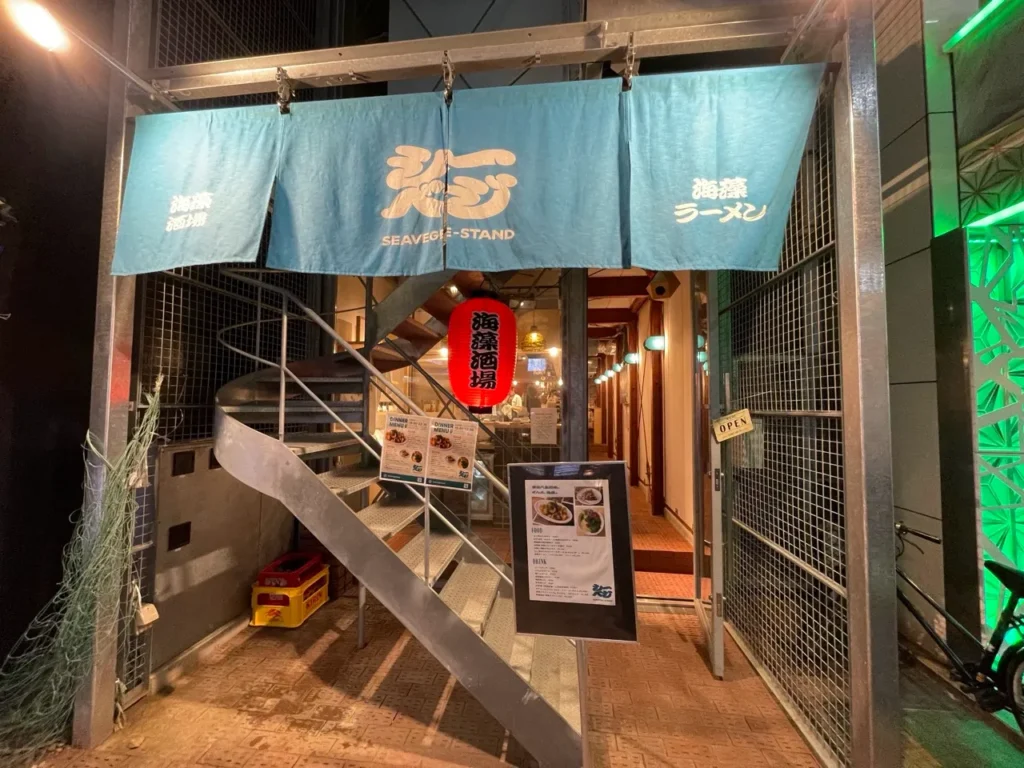
Dinner at SEAVEGE STAND in Tokyo’s Yaesu district gave me a fresh perspective on seaweed. Rather than treating it as a quiet supporting ingredient, this casual standing bar puts sea vegetables firmly in the spotlight—layering ocean aromas, fermented depth, crisp fried textures, and inventive drinks into one memorable evening.
Located just a short walk from Tokyo Station and Nihombashi Station, SEAVEGE STAND is a compelling place to explore if you are looking for an original Tokyo dining experience beyond sushi, ramen, and izakaya classics. It is relaxed enough for a quick post-work drink, yet creative enough to make dinner feel like a small culinary discovery.
A Tokyo Standing Bar Exploring Seaweed’s Future

SEAVEGE STAND is the first permanent restaurant opened by Sea Vegetable, a company involved in seaweed research, cultivation, processing, and recipe development. The shop opened in March 2026 near Yaesu North Exit of JR Tokyo Station, around a three-minute walk from both Tokyo Station and Nihombashi Station.
During the day, the space serves seaweed ramen. At night, it becomes a standing bar where guests can enjoy seaweed-focused small plates alongside alcoholic and non-alcoholic drinks. Its concept—“eat, talk, and explore”—captures what makes this place more than a novelty restaurant. It is a casual introduction to a new kind of seaweed food culture.
The team’s goal is simple but ambitious: to make seaweed a delicious, everyday ingredient rather than something people eat only because it seems healthy. Upstairs, the SEAVEGE-Kitchen Lab brings together chefs and researchers to test seaweed’s culinary potential. The results feel experimental in spirit, but approachable on the plate.
For me, this balance is the restaurant’s biggest strength. You do not need specialist knowledge of seaweed to enjoy the food. You simply arrive hungry and curious.
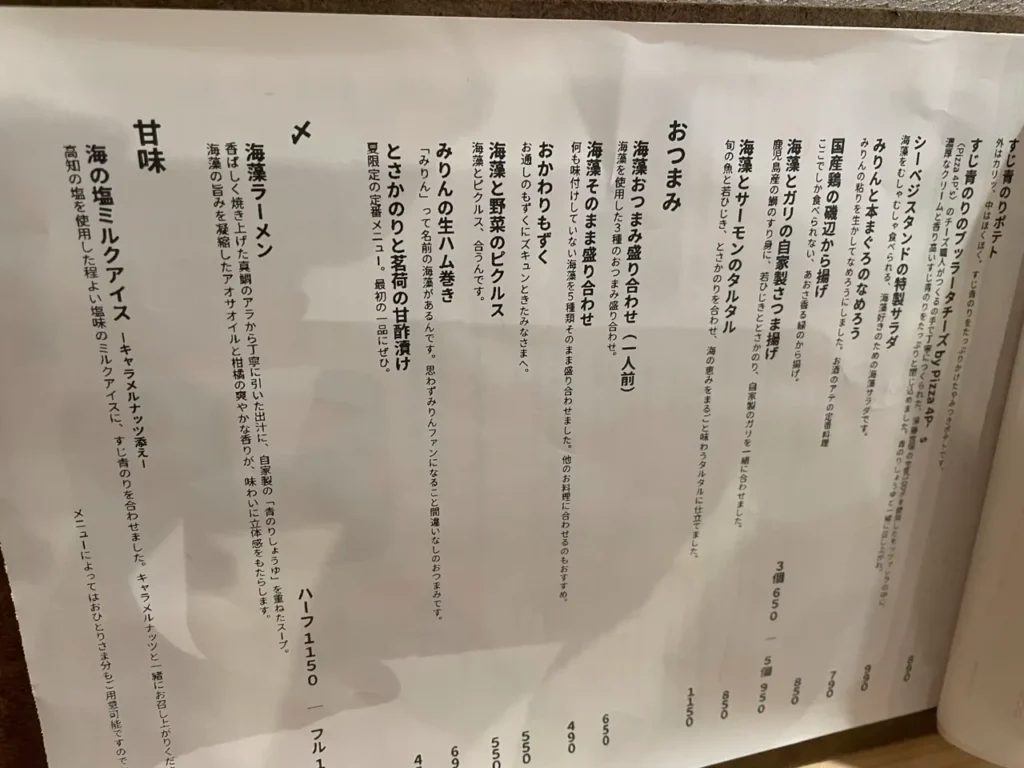
Homemade Fish Cake with Seaweed and Gari
One of the first dishes I would order is the homemade fish cake with seaweed and gari—sweet, vinegared pickled ginger. Served hot from the fryer, it has a deeply golden exterior and a light, springy fish-paste center.
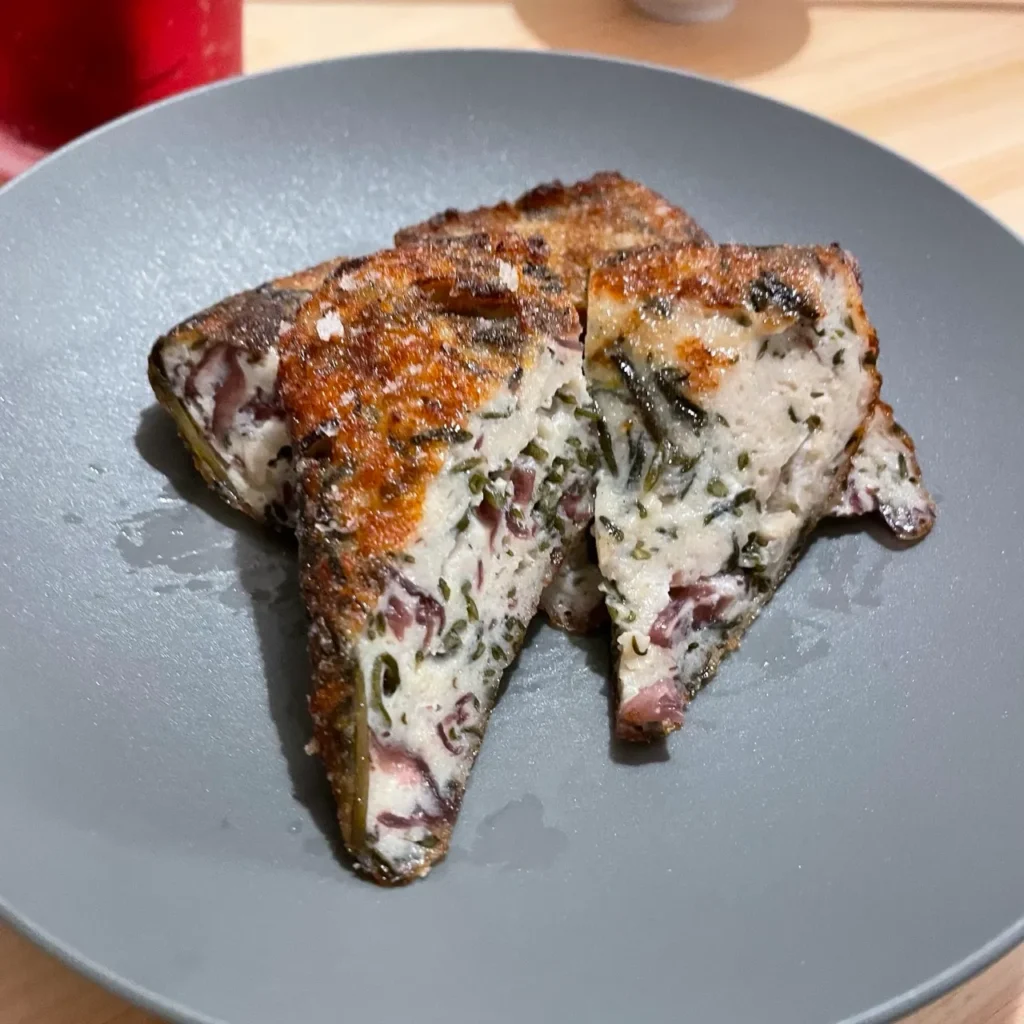
The flavor unfolds gradually. First comes the savory sweetness of the fish cake, followed by a subtle seaside aroma from the seaweed. Then the gari cuts through with gentle acidity and a clean ginger lift. It keeps the dish from becoming too rich and makes every bite feel bright.
Fish cakes can sometimes be heavy or overly sweet, but this version is surprisingly nimble. Instead of overpowering the dish, the seaweed works as a bridge between the sweetness of the fish paste and the refreshing tang of ginger. It is an easy, satisfying first snack to pair with a drink.
Isobe-Style Fried Chicken
The isobe-style fried chicken offers a more direct expression of seaweed. The coating is crisp and light, while the chicken inside remains juicy and flavorful. As I bit into it, the familiar comfort of Japanese karaage gave way to a vivid green, briny aroma from the seaweed-infused batter.
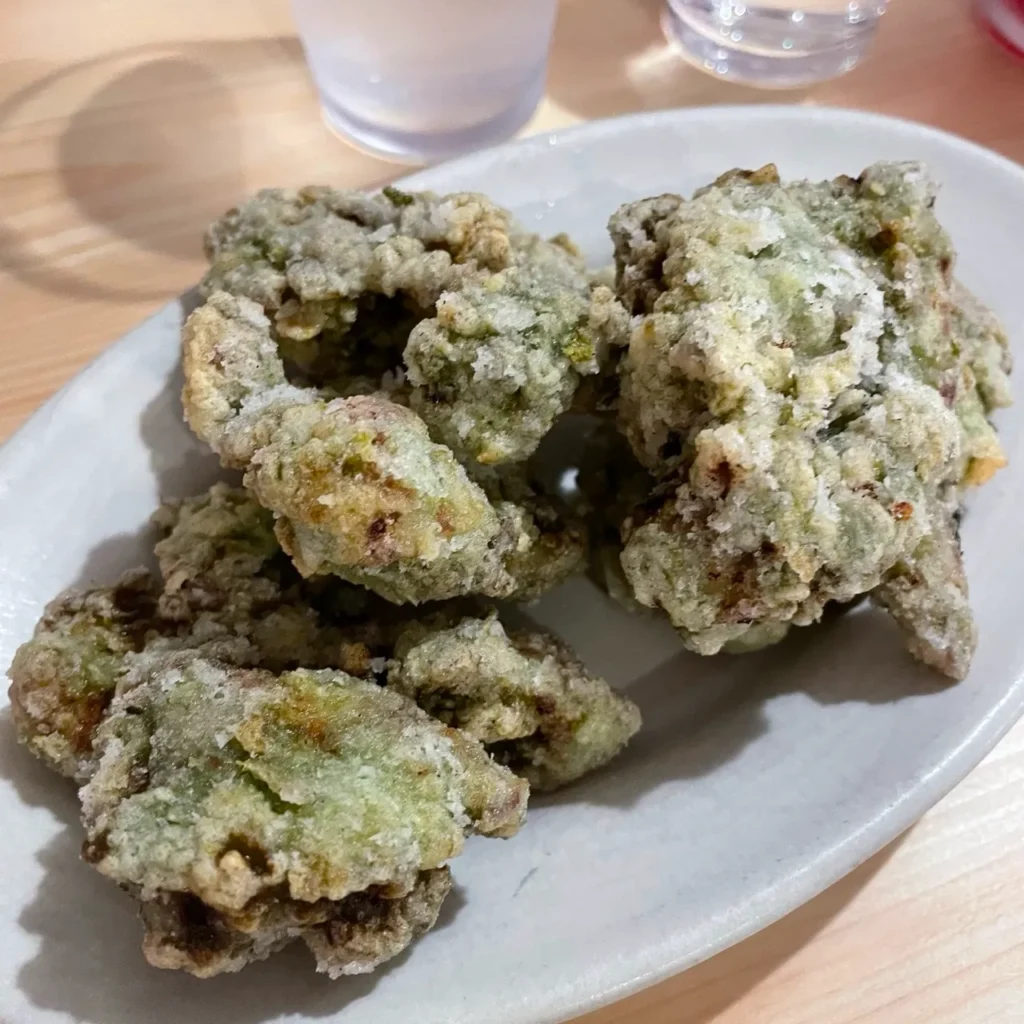
The combination works exceptionally well: fragrant frying oil, savory chicken juices, and a mineral-rich seaweed note all come together without feeling heavy. It is the kind of bar snack that feels immediately familiar, but with enough character to make you pause and take another bite.
Beer and highballs would be obvious matches, but the house seaweed soda also works beautifully. Its sparkle refreshes the palate and keeps the fried chicken feeling lighter than expected.
Mirin Seaweed Wrapped in Perilla Leaf Kimchi
The mirin seaweed wrapped in perilla leaf kimchi is a small dish with a surprisingly big presence. Here, smooth mirin seaweed is paired with aromatic perilla leaf and the fermented heat of kimchi.
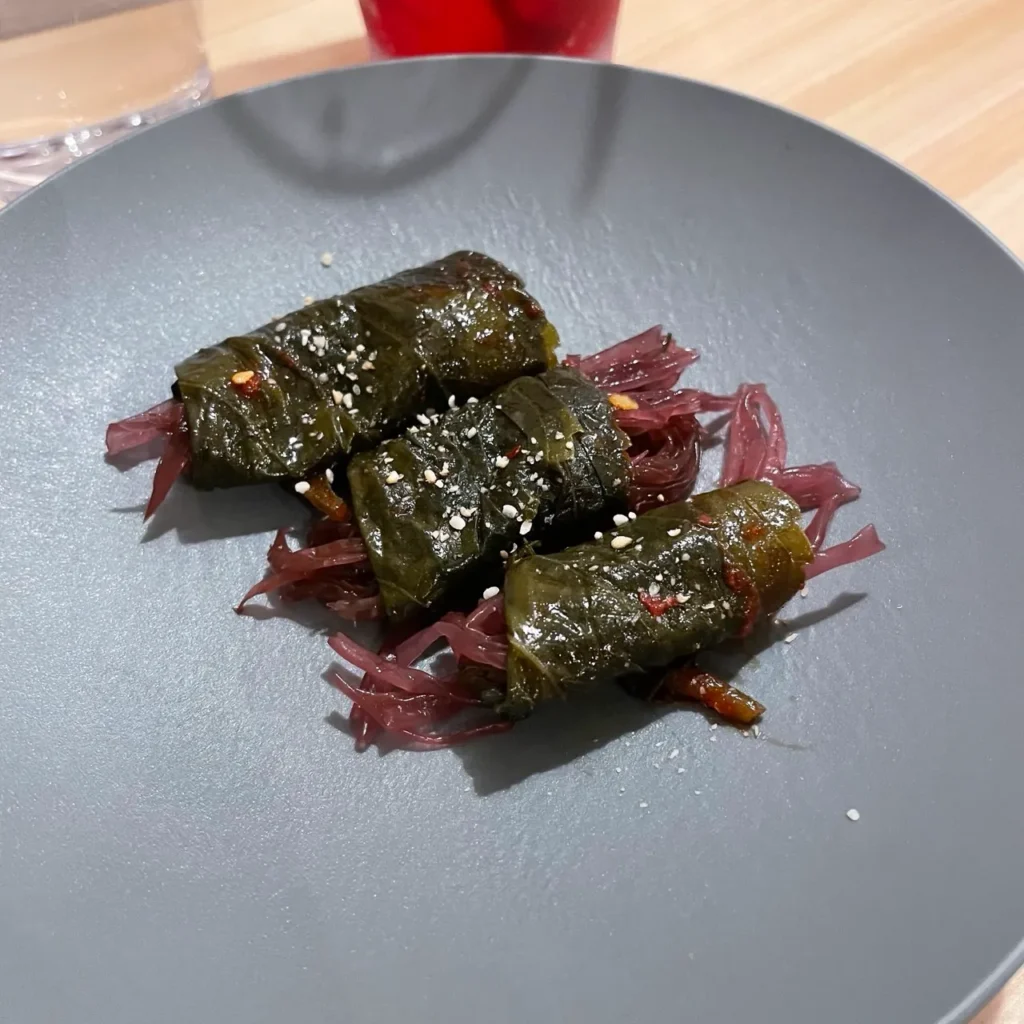
The order of flavors is especially enjoyable. The first impression is the bright, green perfume of perilla, followed by kimchi’s savory spice and fermented richness. Finally, the seaweed leaves a soft, ocean-like finish. The textures are equally engaging: slippery and tender seaweed meets the supple leaf and the lively bite of kimchi.
This dish is a great example of how SEAVEGE STAND avoids treating seaweed as a garnish. Even without meat or fish as the centerpiece, it delivers aroma, saltiness, spice, fermentation, and texture in a carefully balanced composition.
For travelers who think of seaweed only as miso soup wakame or a side dish in a small bowl, this is the plate that may change their mind.
Seaweed Soda
Between bites, I recommend ordering the seaweed soda. The idea may sound unexpected at first, but that surprise is exactly part of the experience at SEAVEGE STAND.
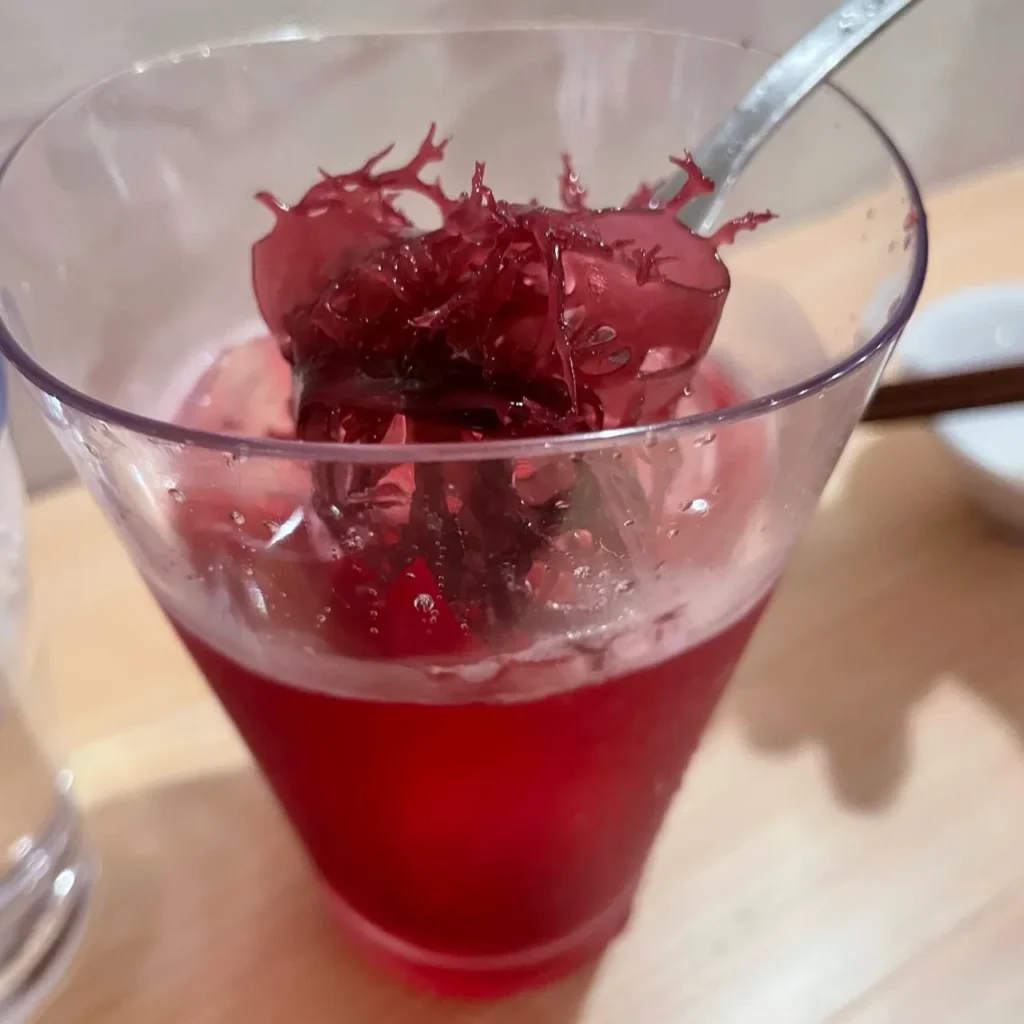
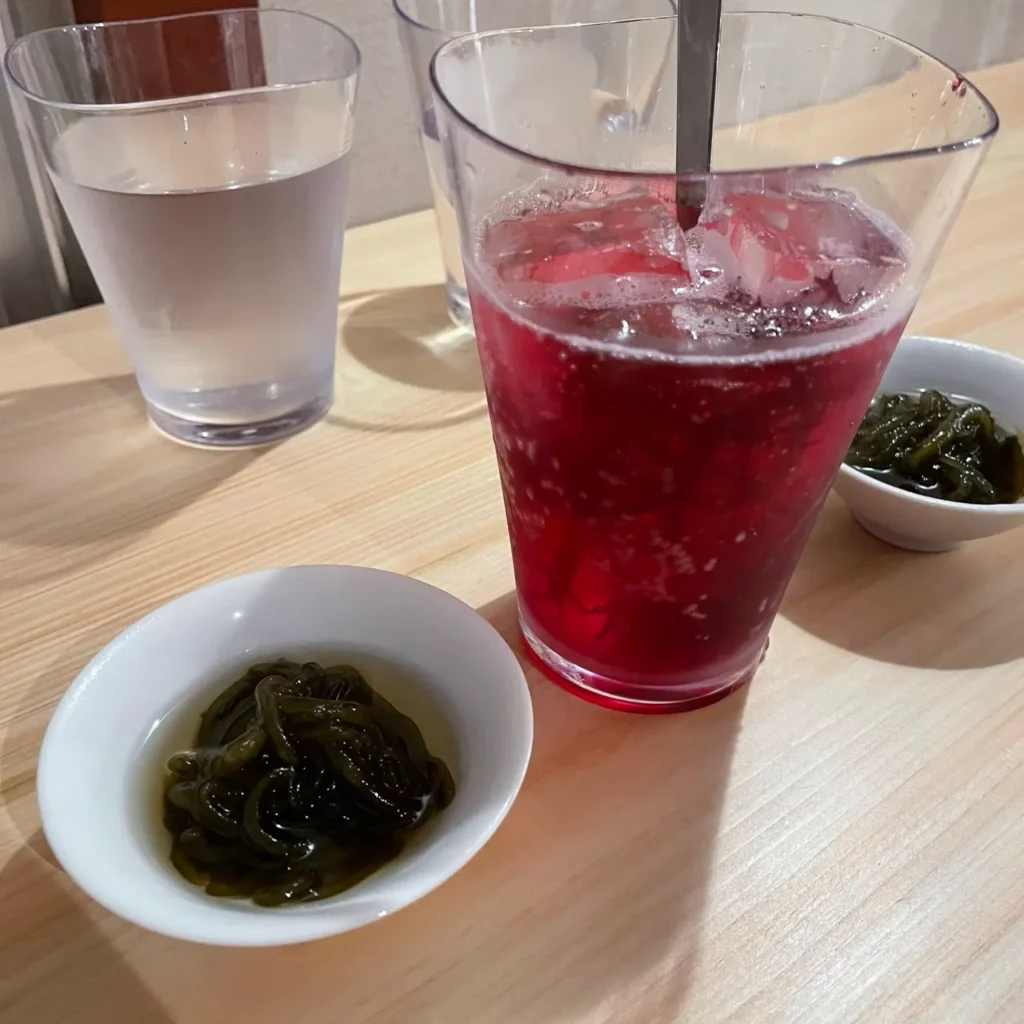
The drink captures a subtle marine character rather than tasting aggressively “seaweedy.” Its carbonation resets the palate after fried food, softens the heat of kimchi, and leaves a gentle coastal nuance behind. It is refreshing, unusual, and far more food-friendly than the name might suggest.
Seaweed is often framed primarily as a health food. Here, it is treated as an ingredient with fragrance, flavor, and finish—something that can belong in a soda as naturally as citrus, herbs, or spices.
Finish With Seaweed Ramen
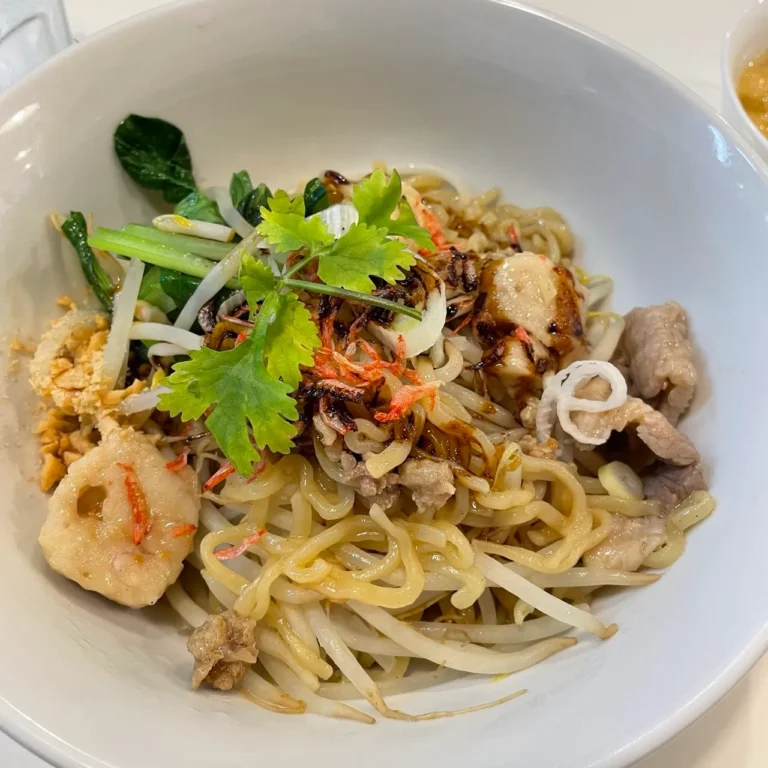
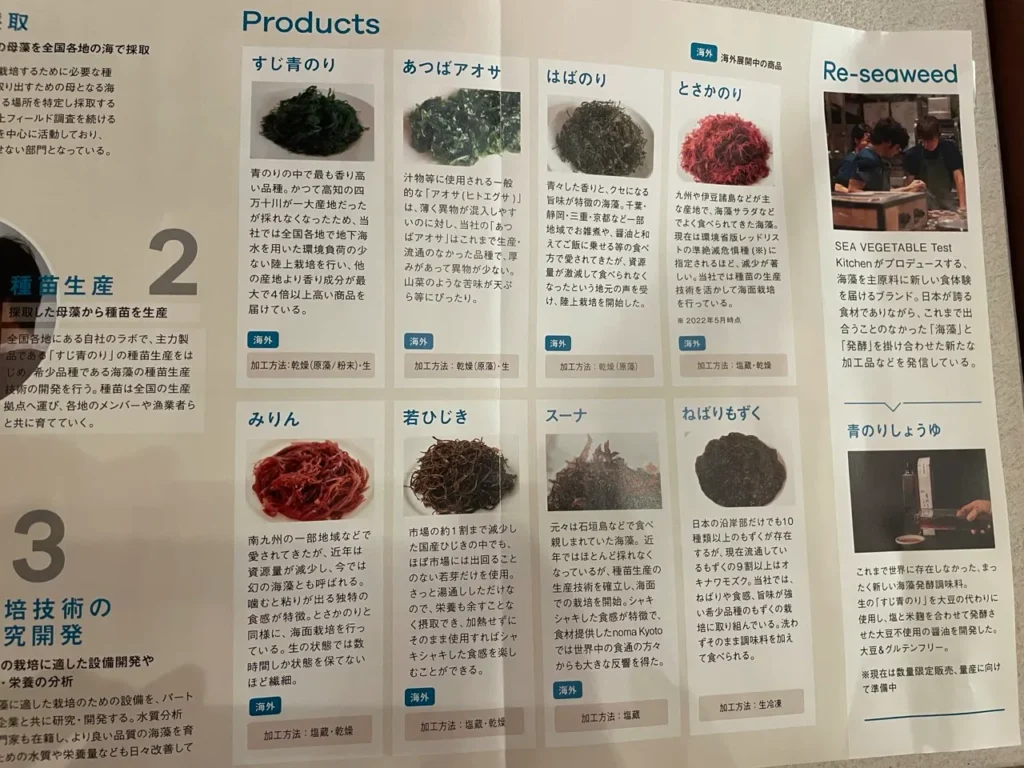
The signature seaweed ramen is the ideal way to end dinner. Its soup begins with a stock made from grilled red sea bream from Amakusa in Kumamoto Prefecture. That delicate, roasted fish broth is then combined with the restaurant’s original aonori soy sauce, made by fermenting green laver with rice koji.
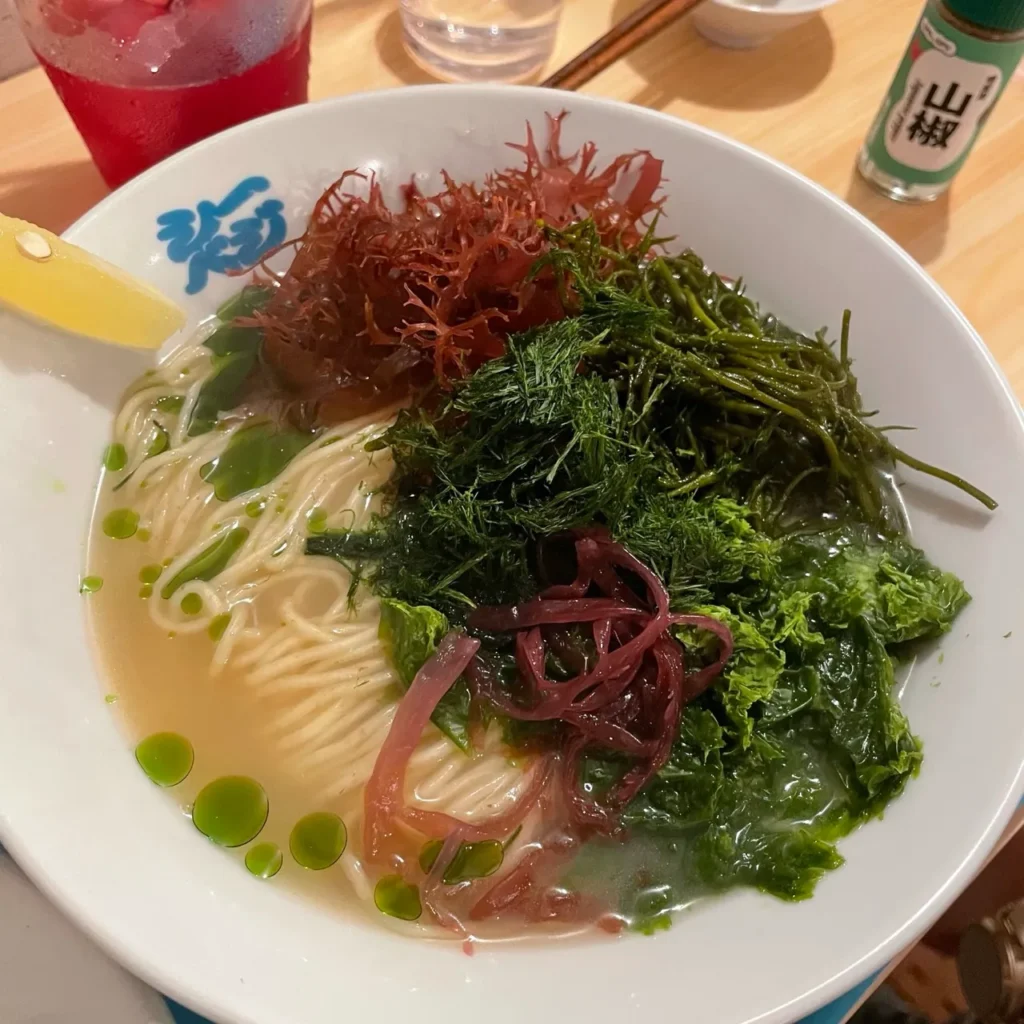
The result is a ramen that is deeply savory but not overly heavy. The sea bream broth brings a rounded sweetness and gentle roasted richness, while the fermented aonori seasoning adds fragrance, umami, and a soft, mellow depth.
Most importantly, the seaweed is not merely scattered on top. Several varieties appear in one bowl, including suji-aonori, thick aosa, tosaka nori, young hijiki, and mirin seaweed. Each one contributes something different:
- Some are soft and airy, dissolving gently into the soup.
- Others have a crisp, fresh bite.
- Some feel smooth and slippery against the noodles.
- Together, they create layers of texture and an evolving aroma of the sea.
As I slurped the noodles, the scent of the shoreline seemed to rise through the steam. It does not taste like a typical seafood ramen; the profile is more nuanced, greener, and more textural. The fish broth provides a comforting foundation, while the seaweed makes the bowl unmistakably its own.
Why SEAVEGE STAND Is Worth Visiting
SEAVEGE STAND is one of the most interesting casual dinner spots near Tokyo Station because it uses seaweed in genuinely varied ways. Rather than relying on one briny flavor profile, the kitchen fries it, ferments it, turns it into a sparkling drink, and layers it into broth.
My standout dishes were:
- Homemade fish cake with seaweed and gari: Soft fish paste, subtle seaweed fragrance, and sweet-tangy ginger.
- Isobe-style fried chicken: Crispy karaage with a fragrant seaweed coating.
- Mirin seaweed perilla kimchi wrap: A bold combination of seaweed texture, herbal perilla, and fermented kimchi heat.
- Seaweed soda: A refreshing and unexpected palate cleanser.
- Seaweed ramen: A satisfying final bowl built around grilled sea bream broth, fermented aonori soy sauce, and multiple varieties of seaweed.
If you want a quick drink after work, SEAVEGE STAND fits naturally into an evening near Tokyo Station. If you are searching for a distinctive food experience in Yaesu or Nihombashi, it is even more rewarding.
This is the kind of place that moves seaweed from “something that is probably good for me” to “something I genuinely want to eat again.” In an easygoing standing-bar setting, SEAVEGE STAND makes seaweed feel contemporary, delicious, and full of possibilities.
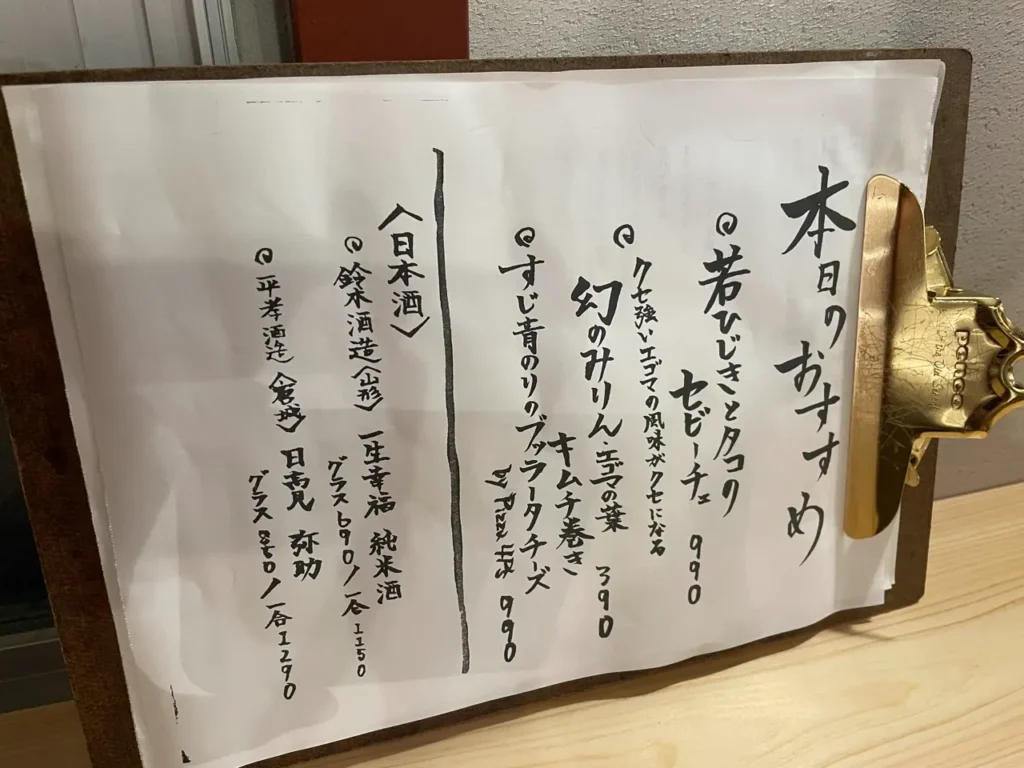
Dinner service is generally held Tuesday through Friday from 6:00 p.m. to 10:30 p.m., although hours may change. I recommend checking the official channels before visiting.