A Bowl That Brings Happiness: “Ramen Aotori”, Wakkanai’s 70-Year-Old Northernmost Ramen Legend

This is our review of “Ramen Aotori” (Maps), visited in July 2026.
If you’ve ever dreamed of eating ramen at the very edge of Japan, Ramen Aotori in Wakkanai is the place. Founded in 1951 and still run with the same dedication by a third-generation couple, this tiny 14-seat counter shop near JR Wakkanai Station serves what many call the soul of Wakkanai ramen: clear, delicate broths, generous local scallops, and a soy sauce chashumen that feels like a warm hug from the north.
Why Ramen Aotori Matters on a Hokkaido Food Trip
Wakkanai is Japan’s northernmost city, and its ramen scene is distinct from Sapporo miso, Asahikawa shoyu, or Hakodate shio. Here, the signature is often a transparent, seafood-forward shio (salt) ramen, built on careful dashi and local ingredients. Ramen Aotori is repeatedly cited as the shop that defines this style—so much so that it’s featured in travel guides and even earned a spot in the Michelin Guide Hokkaido 2012.
For travelers, that makes Aotori a perfect “first or last bowl” in Wakkanai: it’s a 5-minute walk from JR Wakkanai Station, easy to fit into itineraries that also include Cape Sōya, Rishiri/Rebun ferries, or a northern Hokkaido road trip.
A 70+-Year Legacy in a 14-Seat Counter Shop
Ramen Aotori opened in 1951, making it one of Wakkanai’s oldest continuously operating ramen shops. The current third-generation owners emphasize “unchanged since founding” methods, especially the patient, low-heat dashi that gives the broth its clarity and depth.
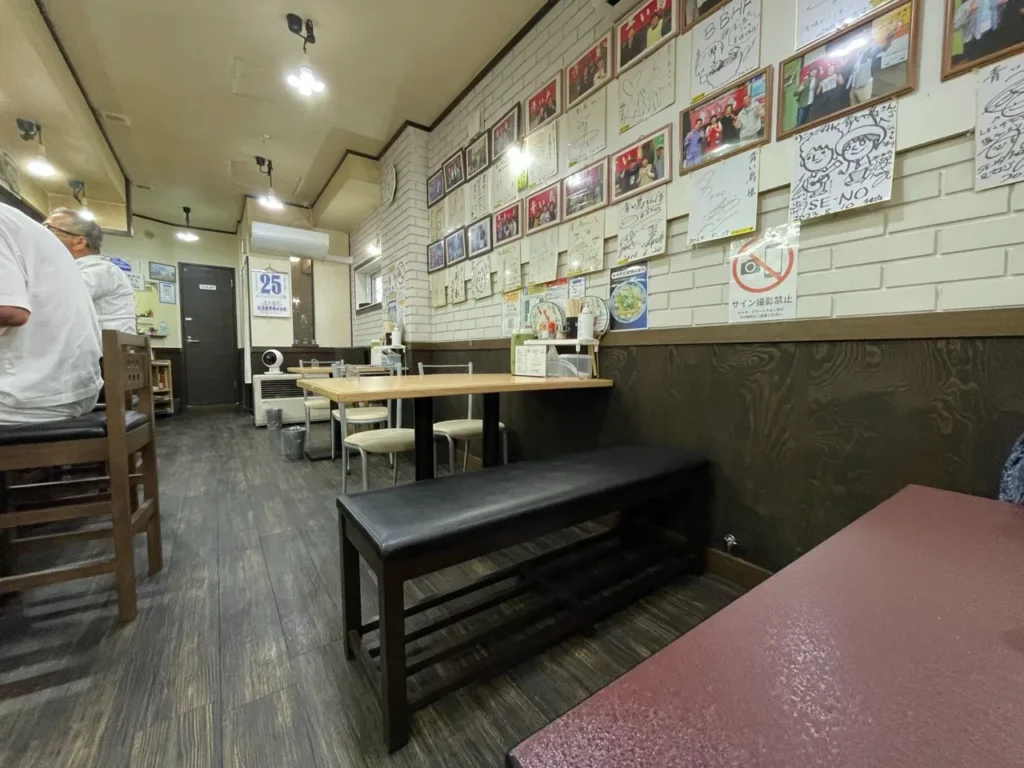
The space is intimate: mostly counter seating for 14 guests, where locals and tourists end up shoulder to shoulder, slurping in a cozy, unpretentious atmosphere. There are no reservations, so expect to queue at peak times—but regulars say the wait is part of the ritual for a bowl worth lining up for.
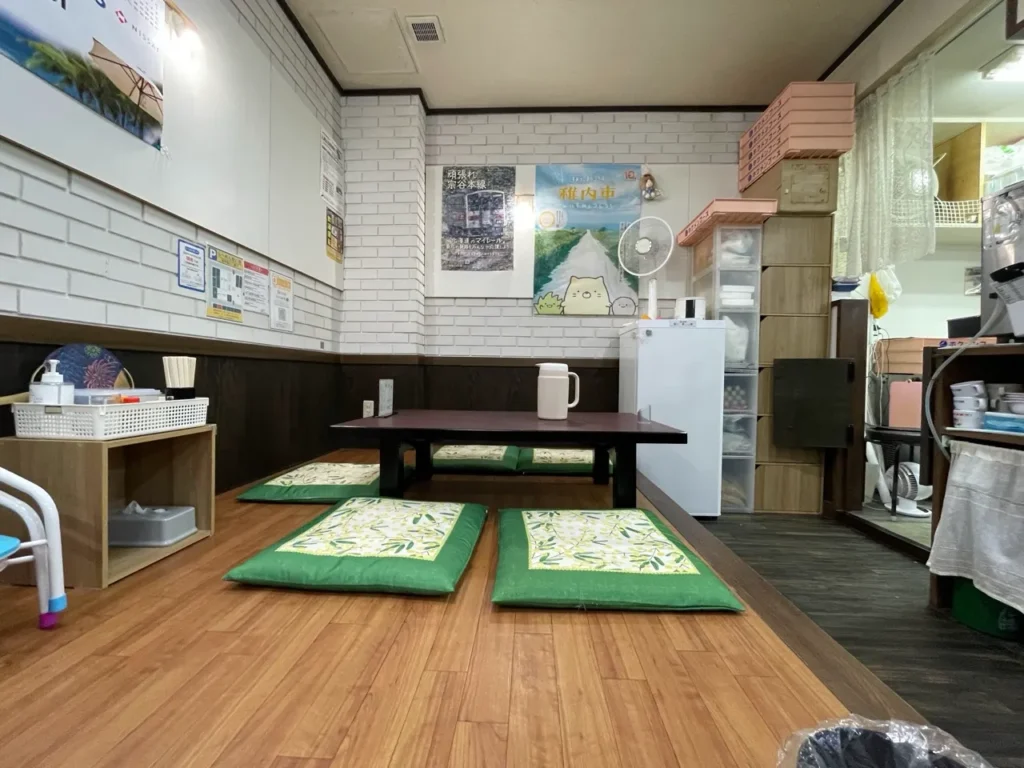
The name “Aotori” (Blue Bird) hints at the shop’s ethos: like the “blue bird of happiness,” they aim to deliver a bowl that makes people glad they came—even if they had to wait.
The Two Must-Order Bowls for Dinner
Shoyu Chashumen (Soy Sauce Ramen with Chashu)
This is the rich, aromatic counterpart to the light salt bowls. The broth is built on pork bone and Rishiri kombu dashi, then seasoned with the shop’s secret soy sauce tare for a deep, savory fragrance. On first sip you get the soy sauce aroma, followed by a mellow pork richness that coats the palate.
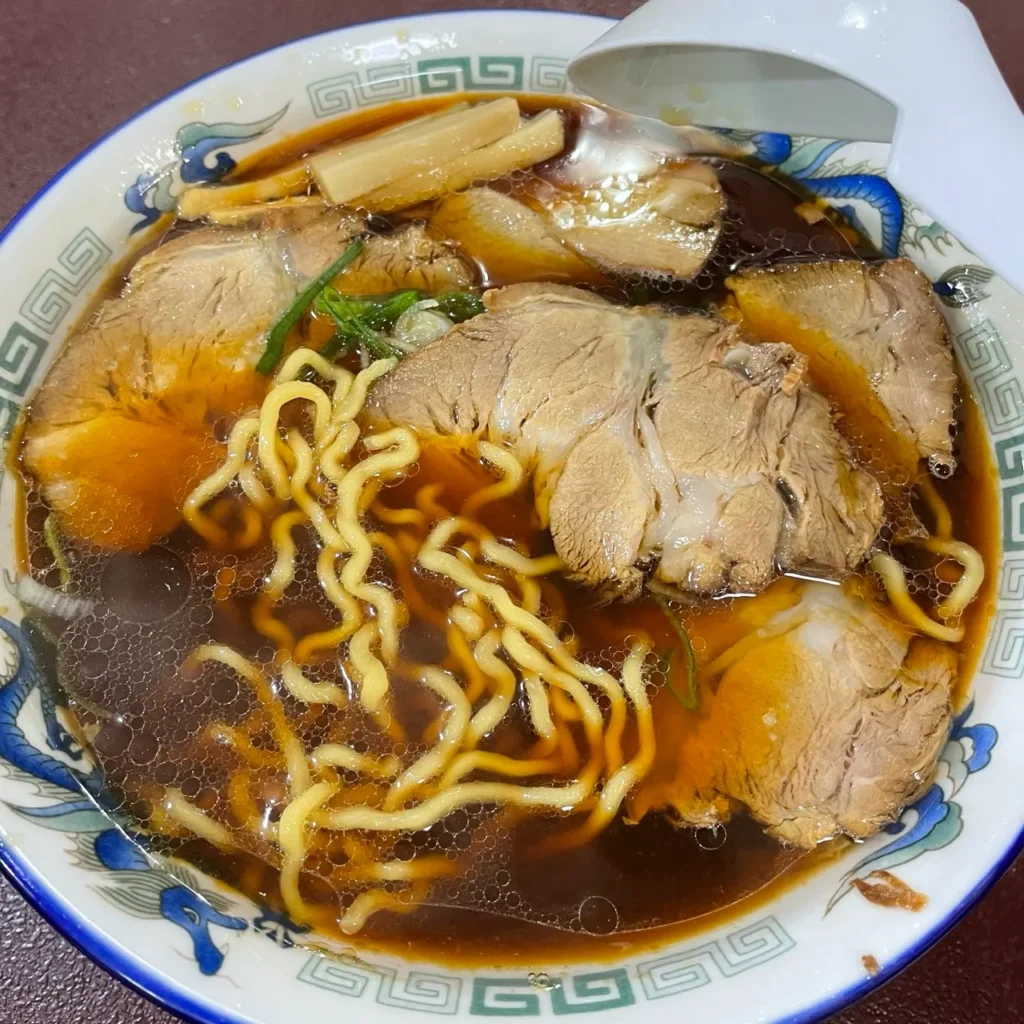
The chashu is made from pork loin, simmered until the fat and lean balance is just right. It’s tender enough to wobble on the chopsticks and melt in the mouth. Toppings like menma and long green onion add texture and layers, making this an ideal “end-of-day” bowl that warms you through.
Noodles are medium-thin and straight, designed to catch the broth while keeping a pleasant, slightly chewy bite.
Hotate Geo Ramen (Scallop “Geo” Ramen)
Wakkanai is synonymous with scallops (hotate), and this bowl leans into that identity. The broth is a clear, light salt base with concentrated umami from the slow-simmered dashi—exactly the kind of “drinkable” soup locals rave about.
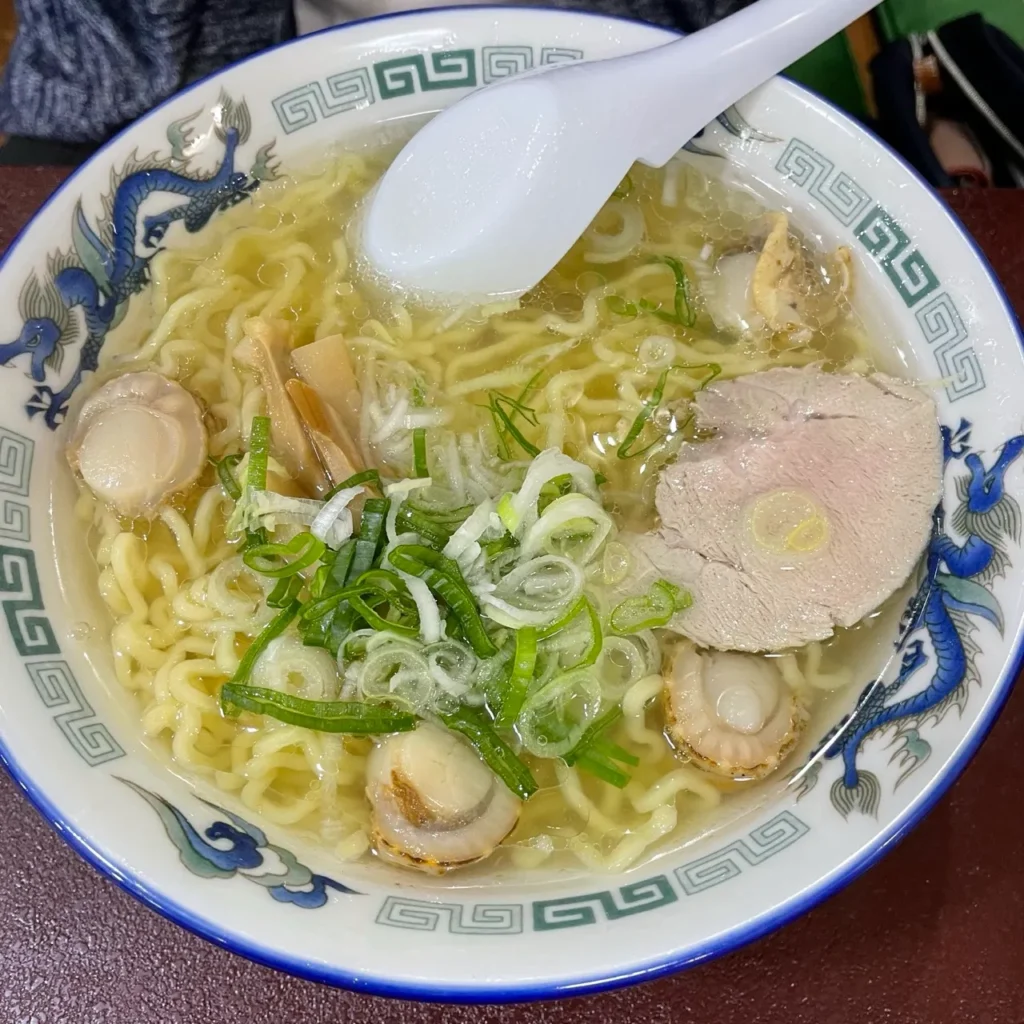
The star is the topping: the bowl comes loaded with around five baby scallops, their sweet, briny flavor and springy texture harmonizing with the clean saltiness of the soup. With two slices of chashu, menma, and negi, the composition stays simple so the scallops can shine. One taste and it’s easy to see why people say they “end up drinking the whole bowl.”
How It Tastes, Smells, and Looks at the Counter
Order the Shoyu Chashumen and the first thing you notice is the ink-dark surface of the soup, glossy with a light sheen of fat and rising steam carrying that roasted soy fragrance. Lift the noodles and the broth clings in fine threads; the first slurp brings a bright soy aroma followed by rounded pork depth.
Switch to the Hotate Geo Ramen and the visual contrast is striking: a crystal-clear broth with white scallops resting on top. Bite into a scallop and you get a gentle snap, then a rush of sweet ocean flavor that lifts the whole bowl. The salt is present but clean, urging you toward the last sip.
What Reviewers and Locals Say
On Japanese review platforms, common notes include:
- “Came because I heard Wakkanai’s salt ramen is great—Aotori didn’t disappoint.”
- “A nostalgic style of ramen, very delicious.”
- “The clear, delicate soup is made over low heat for a long time; the moderate saltiness and umami make you want to finish every drop.”
Locals often describe it as a flavor “worth waiting for,” while tourists call it the signature taste of Wakkanai ramen. The main caveats: limited hours and no reservations, which only add to the “earned bowl” feeling.
Dinner Timing Tips (Especially in Summer)
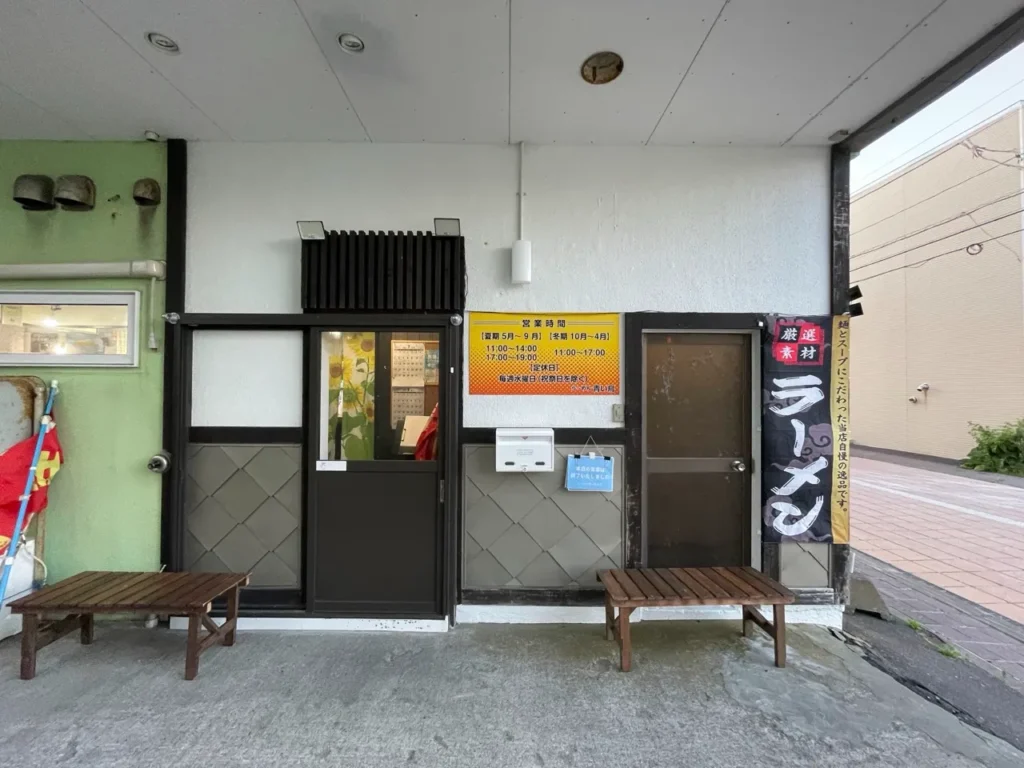
Aotori splits its hours by season:
- Summer (May–September): 11:00–14:00 and 17:00–19:00
- Winter (October–April): 11:00–17:00 (continuous)
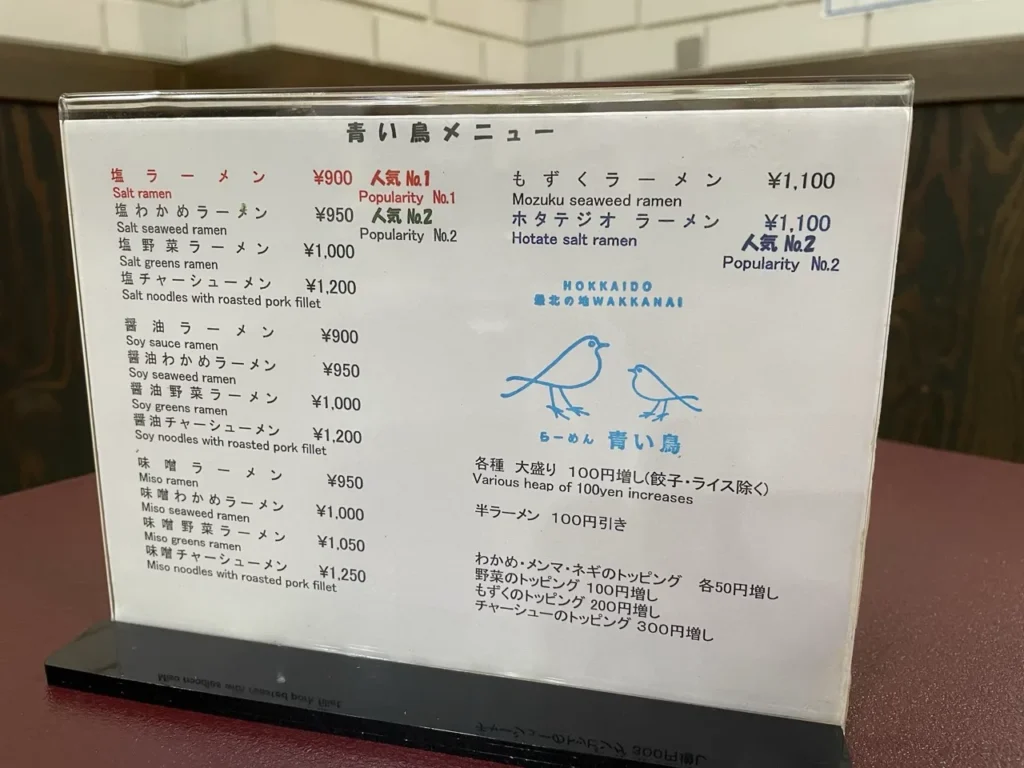
For dinner, aim to arrive right at 17:00 in summer to beat the queue. Since it’s counter-only, seating turns can be quick, but popular times still mean a wait. The menu covers Wakkanai staples—shio, shoyu, miso, plus the scallop Geo Ramen—so you can easily contrast the deep soy bowl with the bright scallop bowl in one visit.
Access and Practical Info
- Address: 2-6-5 Chuo, Wakkanai, Hokkaido
- Access: 5-minute walk from JR Wakkanai Station
- Phone: 0162-23-2914 (no reservations)
- Hours: Summer 11:00–14:00 / 17:00–19:00; Winter 11:00–17:00
- Closed: Wednesdays (except when a public holiday falls on Wednesday)
- Seating: 14 seats (counter-centered)
- Parking: 7 spaces
In a region where every kilometer feels like an adventure, Ramen Aotori offers something rare: a bowl that tastes like history, place, and care—all in a few deliberate sips at Japan’s northern edge.