
This is our review of Akasaka Rikyu Ginza (Maps), visited in December 2025.
Ginza has never been short on culinary glamour, but Akasaka Rikyu Ginza (赤坂璃宮 銀座店), perched elegantly on the 5th floor of the Kōjun Building, brings an especially refined form of Cantonese excellence to the district. This outpost of the renowned Akasaka flagship transforms the traditions of southern Chinese cuisine into a modern dining experience that feels both poised and deeply satisfying.
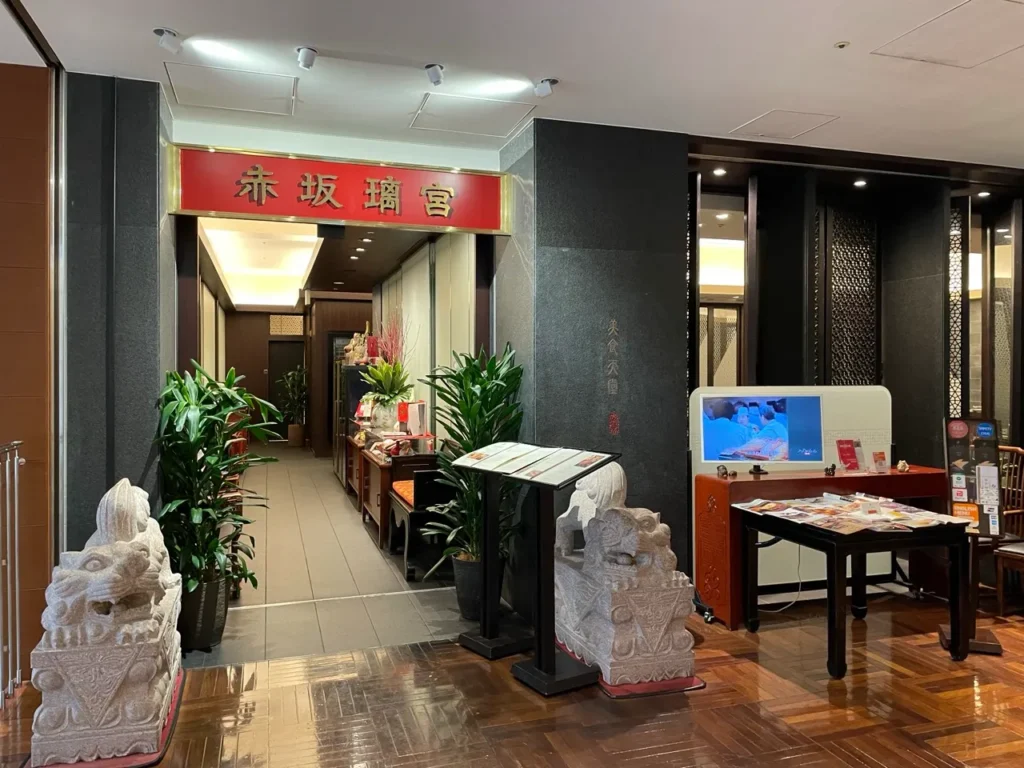
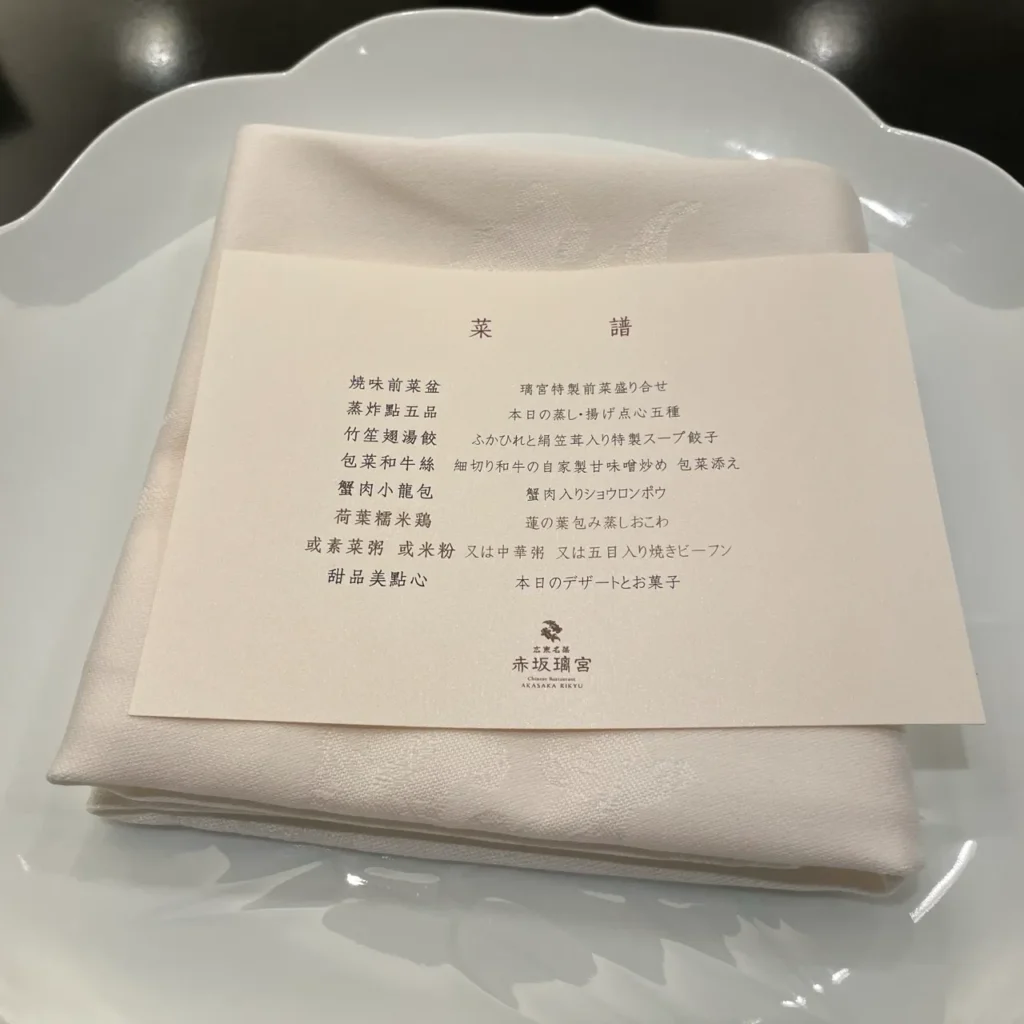
The weekend Yum Cha Course (¥6,500; 飲茶コース) is the highlight—a perfectly calibrated lunch for those who appreciate culinary precision as much as comfort. At this price point, it delivers a rare combination of authenticity, technical skill, and understated luxury that many Ginza establishments strive for but few achieve.
Setting and Atmosphere
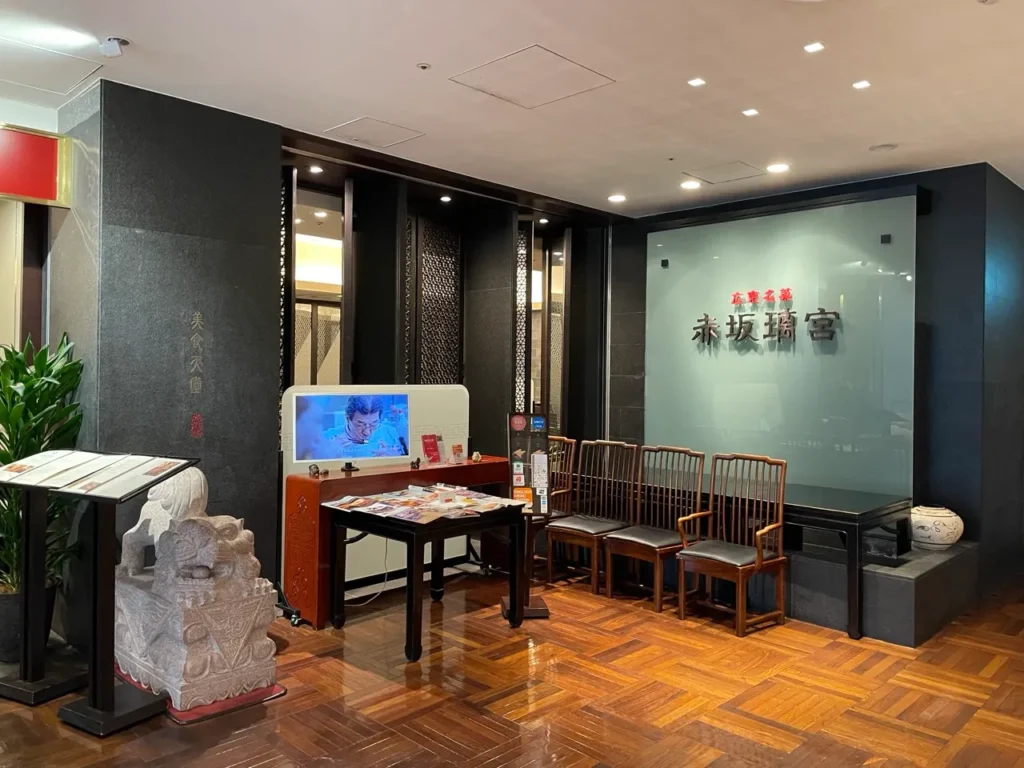
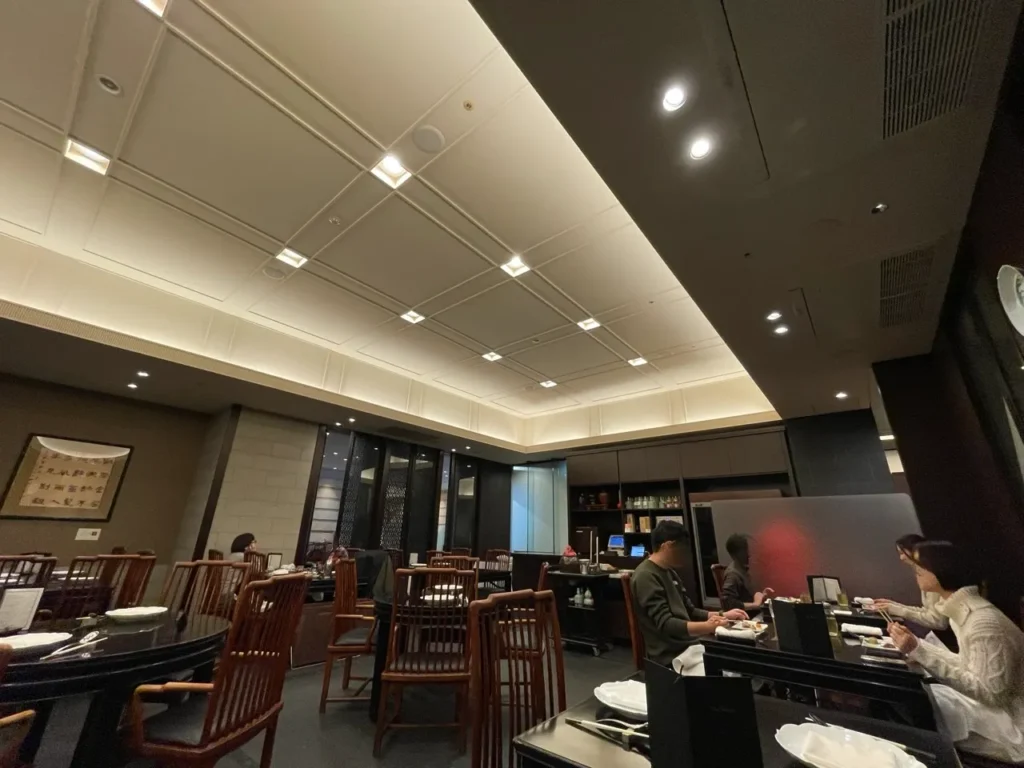
The restaurant occupies an airy, polished space designed to balance discretion with prestige. Under the glow of soft lighting, the clinking of porcelain teacups replaces the city’s clamor outside, lending a rare calm to Tokyo’s busiest shopping district.
Service is on point—measured, not intrusive. Staff move quietly between tables, ensuring tea is hot and plates arrive at the precise temperature intended.
The Yum Cha Journey
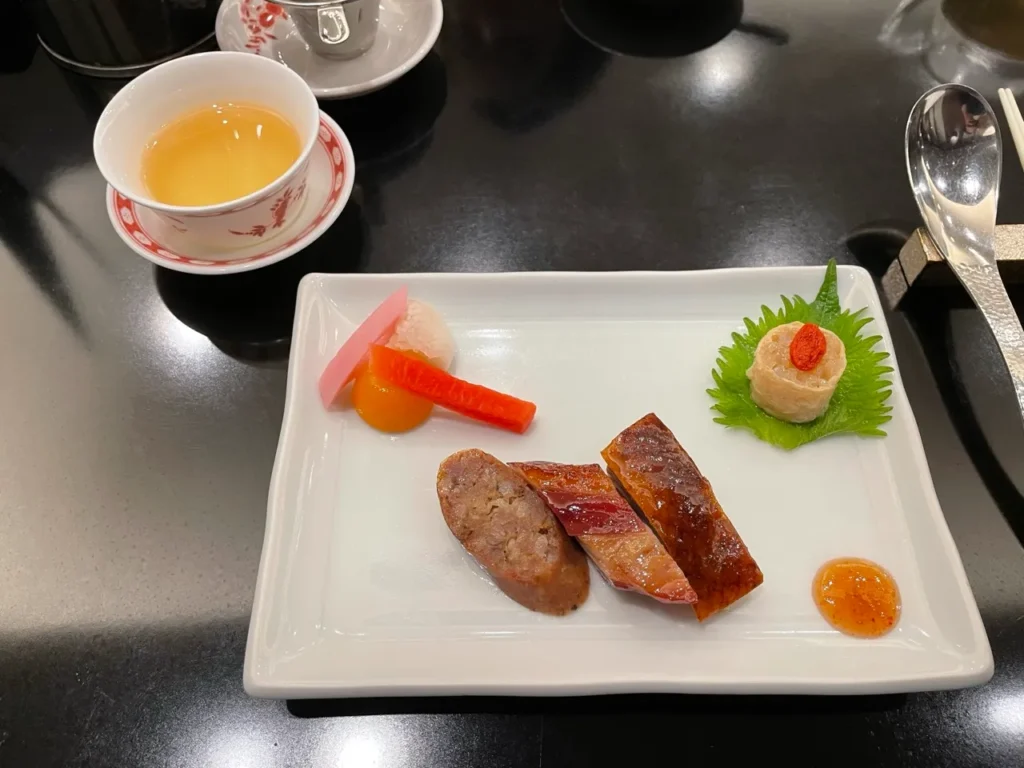
The course opens with the “Rikyu Special Assorted Appetizers (璃宮特製前菜盛り合わせ)”. It is a dazzling plate that captures the essence of Cantonese cuisine. The chilled jellyfish offers a delightfully crisp texture, serving as a luxurious prelude alongside the restaurant’s signature siu laap (roasted meats). The contrast between the tender, smoky duck and the juicy roasted pork is exquisite. Visually, the deep reddish-brown sheen of the duck and the golden caramelization on the pork create a striking presentation, while the sweet-savory aroma of five-spice and honey whets the appetite. The colorful arrangement draws the eye, and the finishing notes of sesame oil and tingling Sichuan pepper add a lively, aromatic accent.
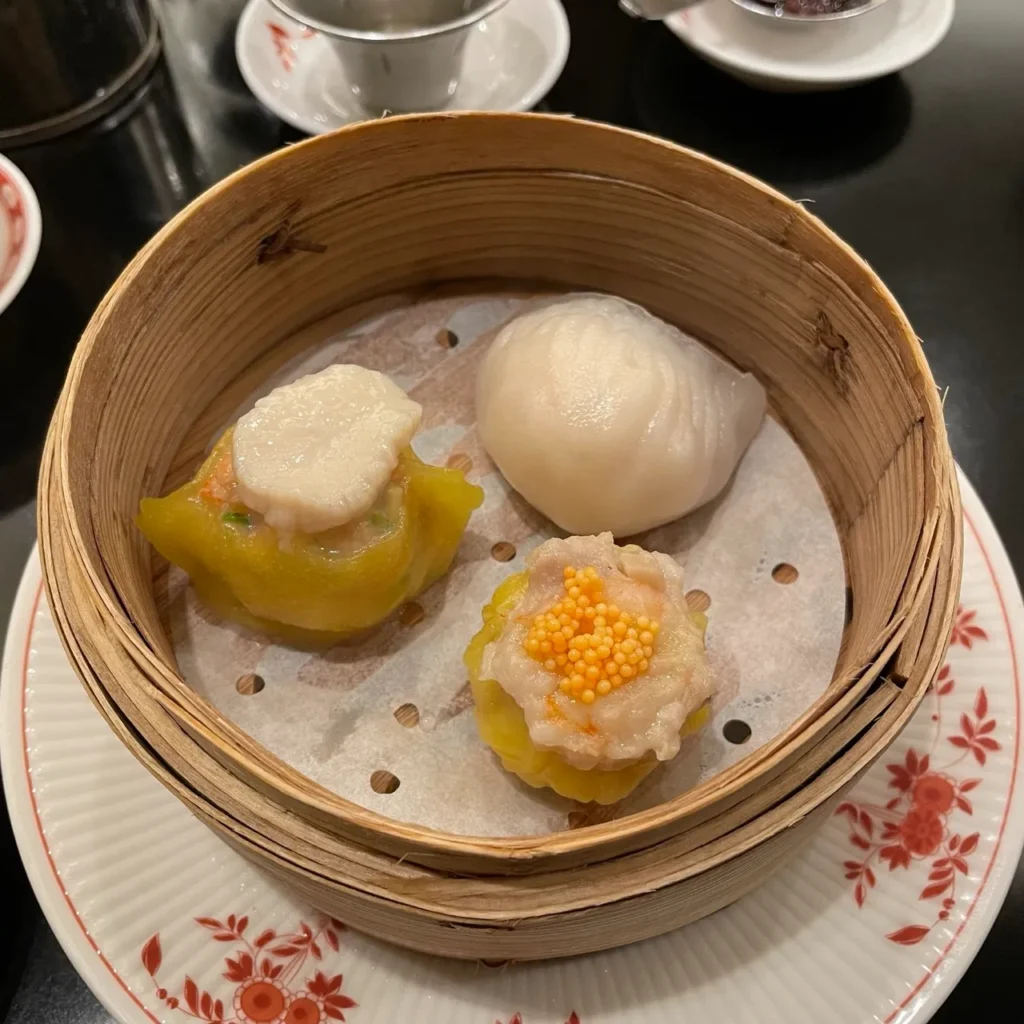
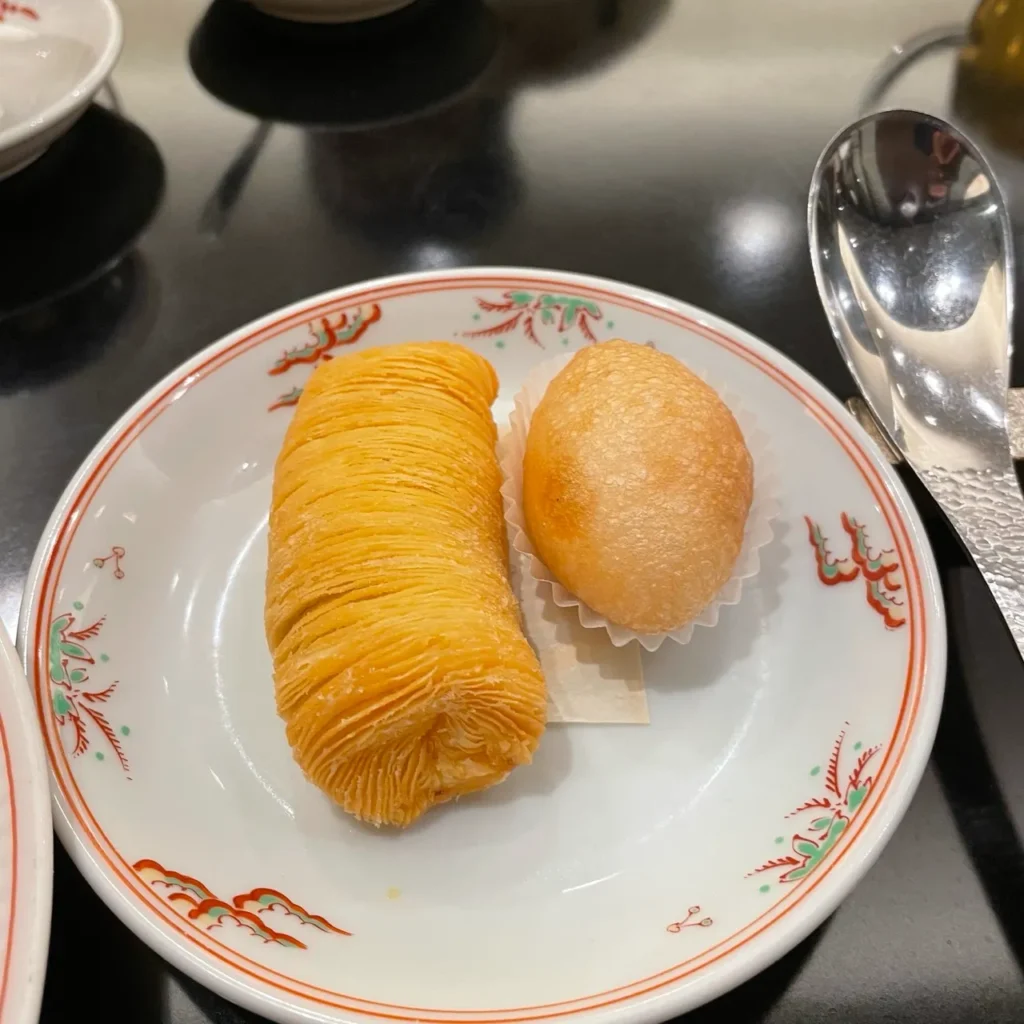
Followed by Steamed and Fried Dim Sum of the Day, a study in contrast and craftsmanship. The steamed dumplings arrive with delicate, elastic skins that conceal fillings of seafood and meat infused with umami-rich consommé. In contrast, the fried selections boast a golden shell that cracks open to release the fragrance of shrimp, bamboo shoots, and sesame. Each bite speaks to a kitchen that respects both technique and restraint.
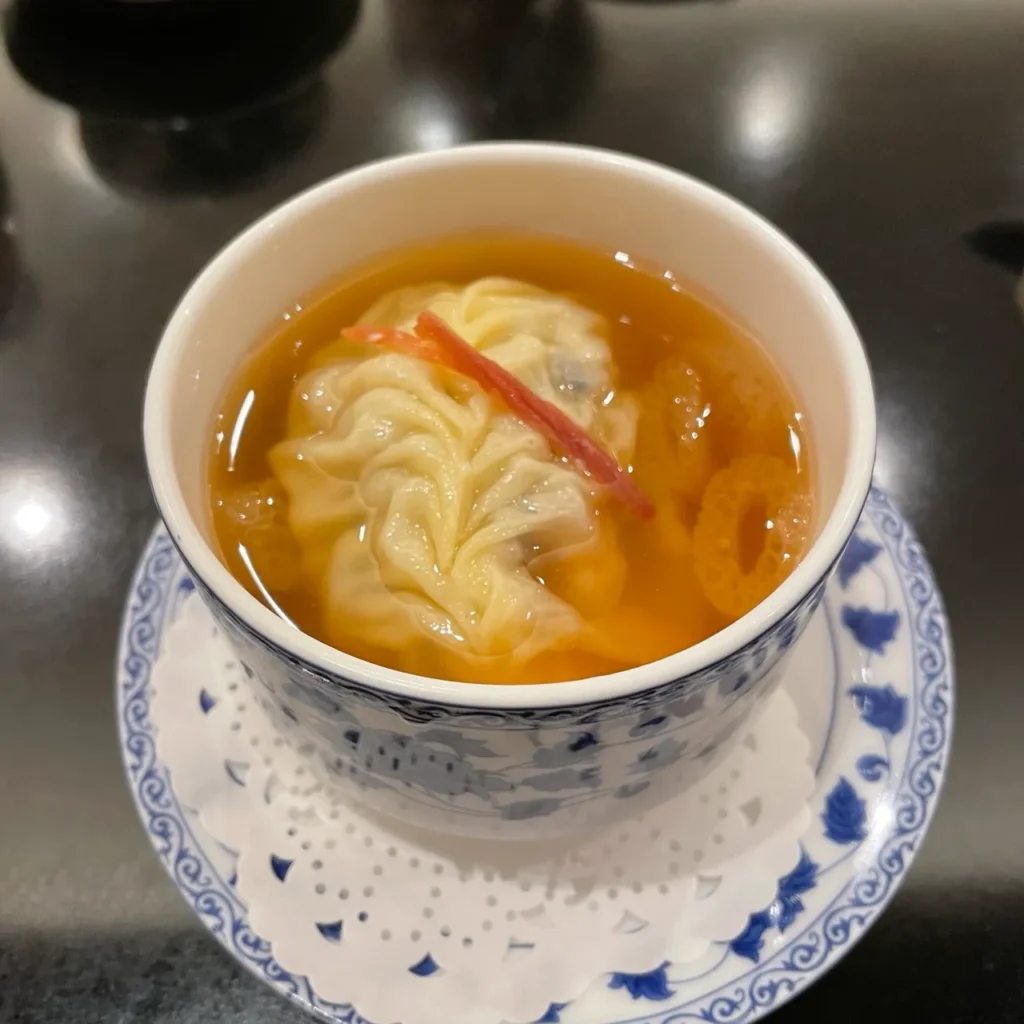
The Shark Fin and Velvet Shank Mushroom Soup Dumpling (ふかひれと絹笠茸入りスープ餃子) that follows is a triumph of subtle layering. The translucent broth carries the tension between the firm elasticity of shark fin and the tender gloss of mushrooms, heightened by the faintest trace of ginger on the finish. The presentation—a modest white vessel with minimal garnish—reflects confidence in its own clarity of flavor.
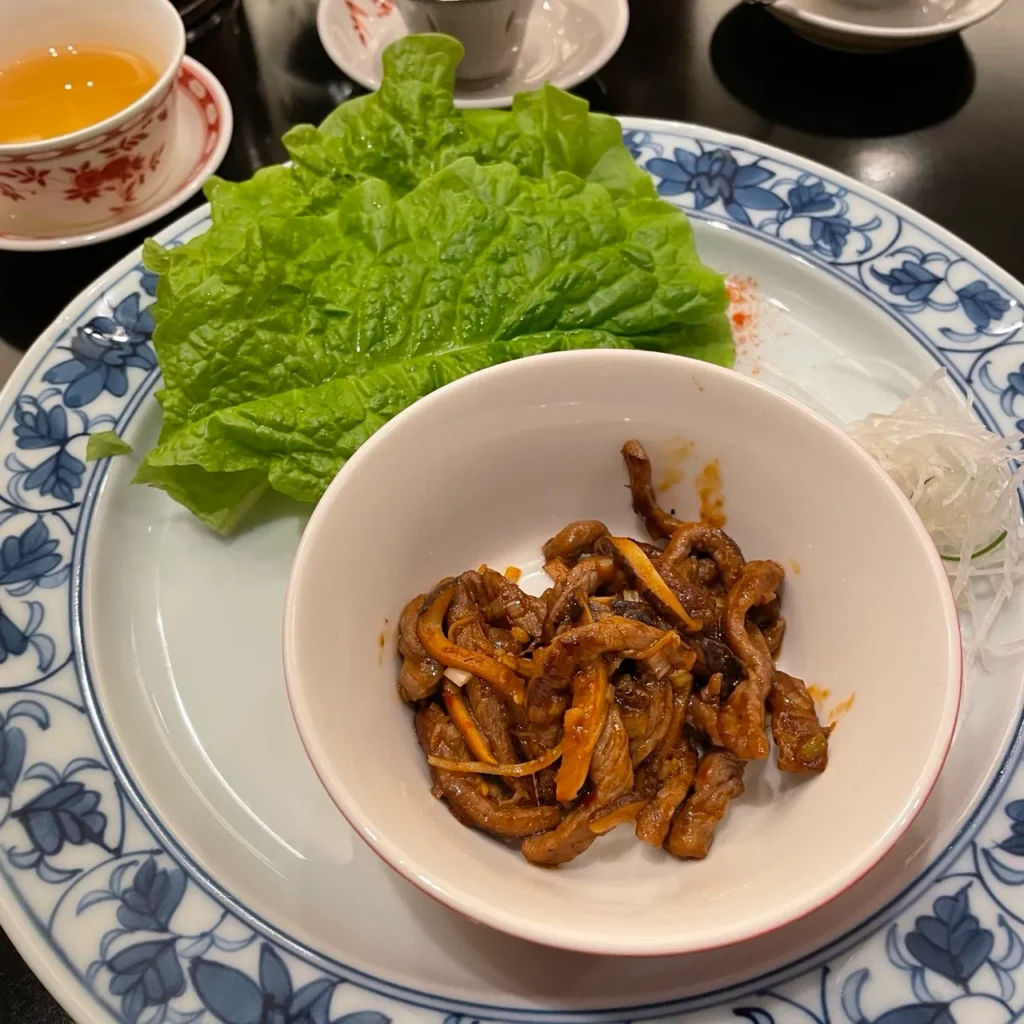
The Sautéed Sliced Wagyu Beef with House Sweet Miso and Cabbage Wraps (細切り和牛の自家製甘味噌炒め 包菜添え) is the course’s emotional crescendo. Here, thinly sliced Wagyu gleams in a sauce that oscillates between caramel sweetness and fermented depth. The addition of crisp cabbage introduces a textural lift, ensuring that the richness never becomes cloying. There is a moment, mid-bite, when the browned butter tones bloom—a sensory cue more commonly associated with French kitchens than Chinese ones, and a testament to the chef’s contemporary sensibility.
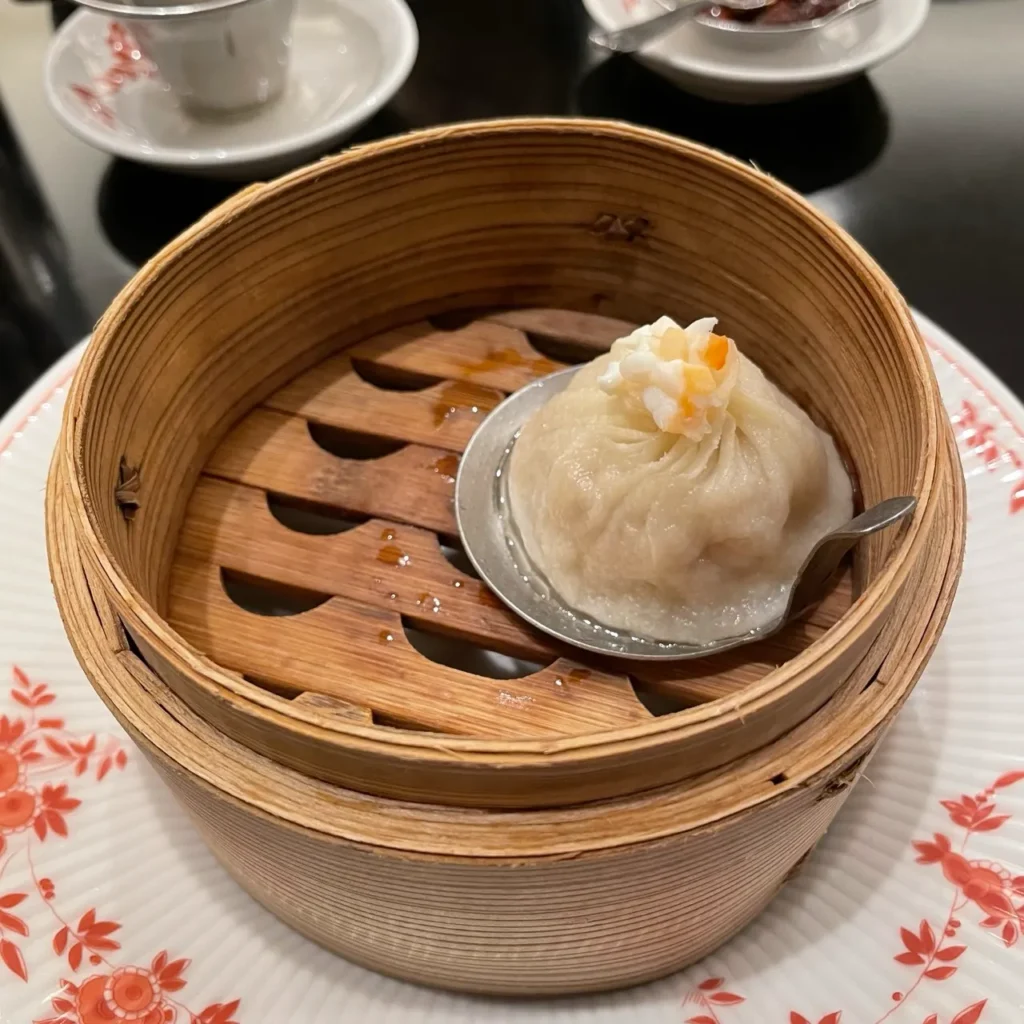
The Crab Meat Xiao Long Bao (蟹肉入り特製小籠包) reinforces Akasaka Rikyu’s command over balance. The dumpling’s skin is sufficiently taut to hold in the savory broth but pliant enough to yield at the first touch of teeth. The filling—fresh, sweet crab suspended in soup—offers one of the most satisfying mouthfuls of the entire course.
The meal concludes with the Stir-Fried Vermicelli with Assorted Ingredients (五目入り焼きビーフン), a dish that risks being perfunctory elsewhere but here is handled with sensitivity. The rice noodles retain their spring, vegetables maintain their bite, and the oyster sauce sings with a roasted umami finish.
The Art of Chinese Tea
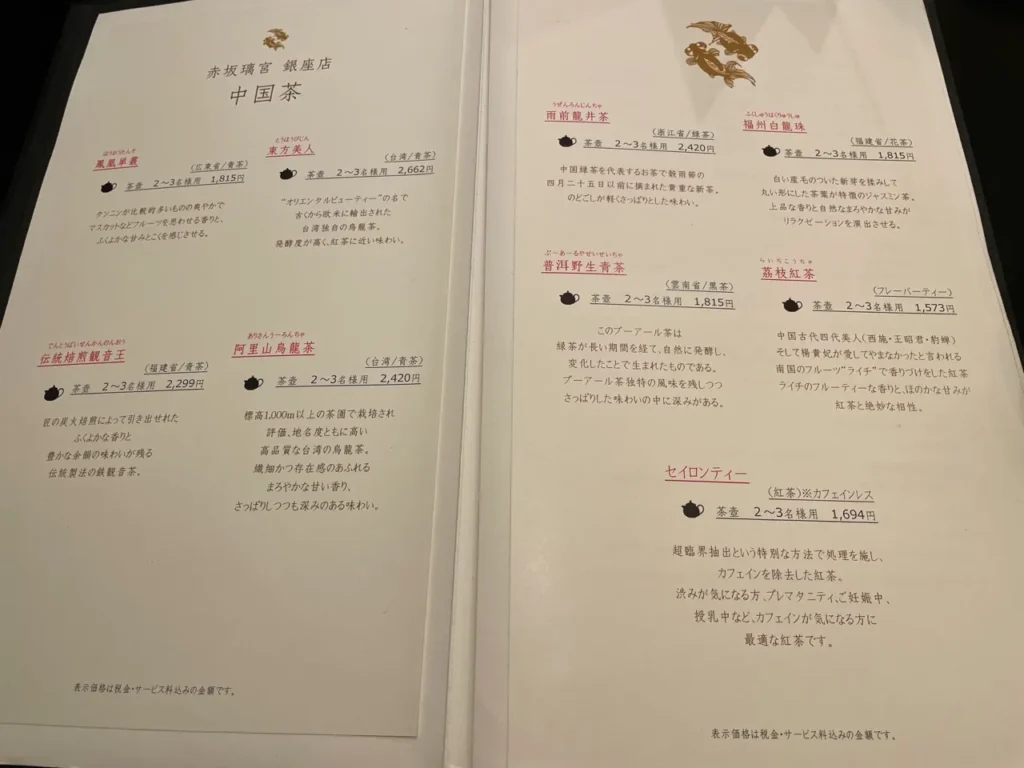
Tea service at Akasaka Rikyu is not an afterthought; it is an extension of the meal’s philosophy. The restaurant offers over ten varieties, each selected to complement specific dishes.
The Bai Long Zhu (White Dragon Pearl 福州白龍珠) jasmine tea unfolds like a floral prelude—aromatic, cleansing, and indispensable with steamed dim sum. The Alishan Oolong (阿里山烏龍茶), roasted yet mineral, stands its ground against the assertive Wagyu miso stir-fry. For something rarer, the Oriental Beauty Tea (東方美人), with its honeyed sweetness and subtle oxidation, harmonizes exquisitely with the crab xiao long bao.
Those who prefer depth can turn to Pu’er, whose earthy, aged aroma aids digestion after a rich midday meal. Meanwhile, the Lychee Black Tea (荔枝紅茶)—red-hued and fruit-forward—serves as a closing note, reminiscent of dessert without crossing into indulgence.
All teas are served by the pot, and several are available for purchase, allowing guests to recreate a small piece of the experience at home.
When the final cup is set down, what lingers most is not extravagance but equilibrium. Akasaka Rikyu Ginza succeeds because it refuses to overstate itself: every element, from seasoning to presentation, feels considered. For ¥6,500, the meal achieves a harmony of flavors and textures rarely encountered at this price tier in central Tokyo.
In a dining landscape crowded with spectacle, Akasaka Rikyu Ginza distinguishes itself by offering refinement without affectation—a quiet confidence that stands as the hallmark of great Cantonese cooking.